Is High Mileage Bad for a Car or Just Normal Wear?

High mileage is usually normal wear, not a deal-breaker, if the car has maintenance records and no signs of neglected repairs; trouble starts when wear items become repeated failures. Ignore that line, and you can buy hidden repair bills, safety issues, and weak resale value. This guide separates normal aging, repairable problems, and warning signs that mean high mileage is no longer just wear.
What high mileage really means
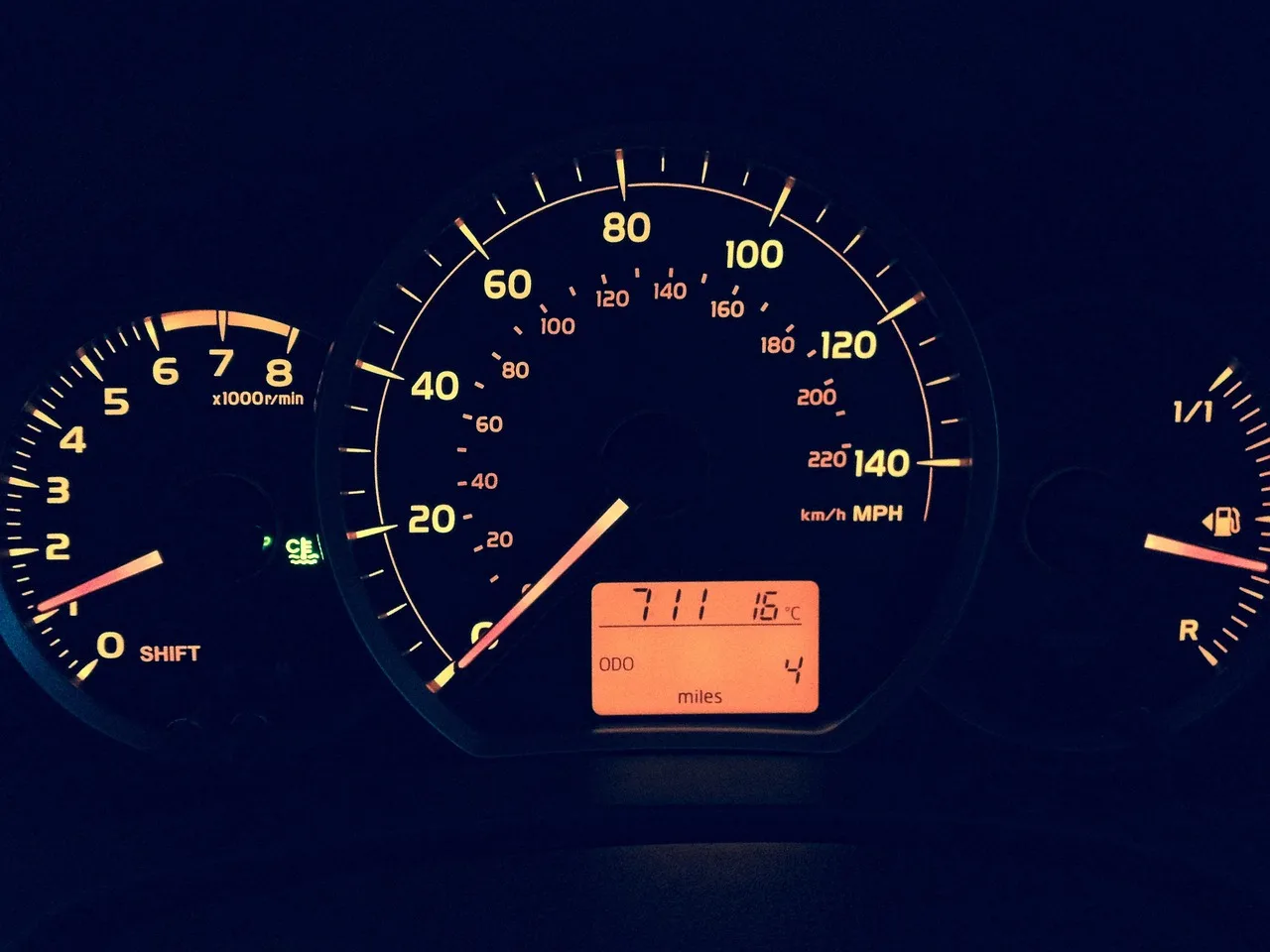
Mileage is a proxy for use, not a verdict. At a typical annual mileage, a 200,000-mile car has usually seen many years of service, repeated heat cycles, starts, stops, and maintenance decisions. That history matters as much as the number on the odometer.
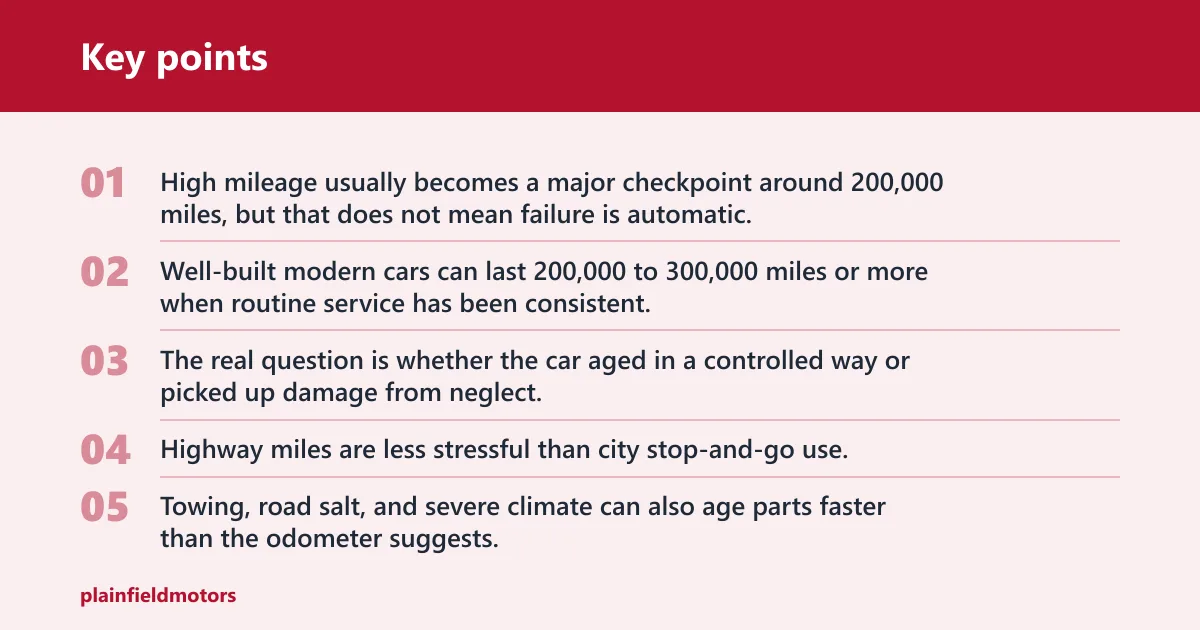
High mileage usually becomes a major checkpoint around 200,000 miles, but that does not mean failure is automatic. Well-built modern cars can last 200,000 to 300,000 miles or more when routine service has been consistent. The real question is whether the car aged in a controlled way or picked up damage from neglect.
Highway miles vs city miles
Highway miles are less stressful than city stop-and-go use. Steady cruising keeps engine speed and heat more stable, while city driving adds more braking, idling, cold starts, and short heat cycles. A car with mostly highway miles can often look and feel younger than one with the same odometer reading from dense urban use.
Short trips are harder on an engine than steady highway cruising because fluids may not reach full operating temperature long enough to burn off moisture and fuel dilution. Towing, road salt, and severe climate can also age parts faster than the odometer suggests.
Does mileage matter more than age?
Neither one wins by itself. Age wears out rubber, fluids, seals, electronics, and plastic connectors even when the car is parked a lot, while mileage wears out moving parts through repeated load and friction. The better buy is usually the car whose age and mileage match a clean service history.
How age affects rubber, fluids, and electronics
A low-mileage older car can still need work because hoses harden, seals shrink, brake fluid absorbs moisture, and connectors corrode. Electronics also become less predictable as wiring insulation, grounds, and sensor contacts age. If a car is old but lightly used, age-related maintenance can still be the bigger concern.
How mileage affects moving parts
Mileage mainly tracks wear on parts that move under load, such as piston rings, seals, bearings, clutches, shocks, struts, bushings, tie rods, and ball joints. More miles usually mean more cumulative wear, but clean maintenance can slow that process. A neglected 90,000-mile car can sometimes be in worse shape than a well-maintained 180,000-mile car.
When age is the bigger concern
If a car has low mileage but long gaps between service, dried-out seals, old coolant, old brake fluid, cracked belts, or brittle vacuum hoses, age may matter more than the odometer. That is especially true for cars that sat outside for years or were rarely driven long enough to circulate fluids fully.
How maintenance history changes the answer
Maintenance history is the biggest filter between normal wear and real trouble. Oil-change timing, service records, fluid changes, and preventive replacement history show whether the car’s wear was managed or allowed to build. Two cars with the same mileage can have very different outlooks.
Oil change schedule and engine life
Regular oil changes help limit sludge, varnish, and internal wear. Skip them often enough and high-mileage engines can develop minor oil consumption from worn rings and seals. That may be manageable if it stays minor, but it becomes a warning sign if the engine needs frequent top-offs or starts smoking.
Service records and preventive replacement history
Records matter because they show whether timing components, belts, water pumps, plugs, coils, transmission service, coolant, brake fluid, and other wear items were handled on time. Preventive replacement is often cheaper than waiting for a breakdown. A complete file also makes it easier to predict what is due next.
Fluid changes that matter most on used cars
Transmission fluid, engine oil, coolant, brake fluid, and power steering fluid all age over time. Fluid condition affects how a high-mileage car shifts, cools, stops, and steers. If the seller cannot explain when these fluids were last changed, expect more uncertainty and more inspection risk.
- Check the records first. Look for oil changes, coolant service, transmission service, and major wear-item replacement. Consistent intervals matter more than a stack of random receipts because they show whether the car was maintained on a schedule.
- Compare service to mileage. Match the last major services to the odometer reading. If timing parts, fluid changes, or suspension work were long overdue, the car may be in the repair window rather than the healthy-wear window.
- Look for pattern failures. Repeated repairs for the same system often mean a deeper issue. A single replacement can be normal; repeated failures in the same subsystem can point to neglect, contamination, or a design problem that deserves a lower offer.
High mileage wear on the engine and transmission
Engine and transmission condition usually decide whether a high-mileage car is still a fair buy. Some wear is expected. Repeated misfires, leaks, and shifting problems are not. The difference is whether the symptoms are light, stable aging or signs of a component nearing failure.
Piston rings, seals, and oil consumption
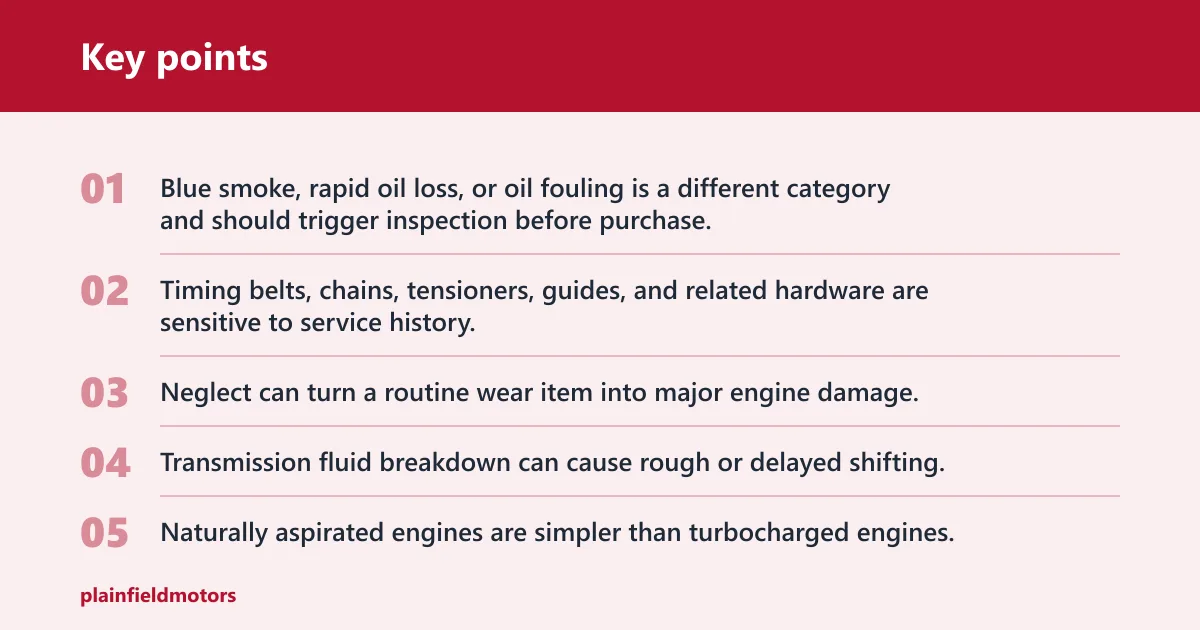
High-mileage engines can develop wear in piston rings and seals, which may lead to small oil leaks or minor oil consumption. A little seepage is common on older cars. Blue smoke, rapid oil loss, or oil fouling is a different category and should trigger inspection before purchase.
Timing components and neglected service
Timing belts, chains, tensioners, guides, and related hardware are sensitive to service history. Neglect can turn a routine wear item into major engine damage. If the maintenance record is unclear, timing service status should be treated as a priority question, not a background detail.
Transmission fluid breakdown, rough shifts, and delayed shifts
Transmission fluid breakdown can cause rough or delayed shifting. That symptom may start as a small delay into gear or a hesitant shift at low speed. If it becomes persistent, harsh, or accompanied by slipping, the car may need service soon or already have internal wear.
Turbocharged vs naturally aspirated engines
Naturally aspirated engines are simpler than turbocharged engines. Turbocharged engines run hotter and stress components more, so they are usually more maintenance-sensitive over time. A turbo car can still be durable, but it usually rewards stricter oil changes, closer cooling-system attention, and faster response to leaks or boost issues.
Suppose two compact SUVs both show 160,000 miles. One is a naturally aspirated model with regular oil changes and no leaks. The other is turbocharged, has delayed oil service, and shows oily residue around the charge piping. The first is more likely to be ordinary wear; the second deserves a deeper inspection and a lower offer.
What suspension and steering wear looks like
Suspension and steering parts are among the most predictable high-mileage wear items. Shocks, struts, bushings, tie rods, ball joints, and some power steering components wear gradually, so the question is usually not whether they age, but how far that wear has progressed.
Shocks, struts, and bushings
Suspension wear commonly affects shocks, struts, and bushings. The car may feel floaty, clunky over bumps, or less settled in corners. Mild wear can be normal at high mileage, but uneven tire wear, bouncing after bumps, or instability at speed means the car needs attention.
Tie rods, ball joints, and looseness
High-mileage steering wear can involve tie rods and ball joints. Play in these parts can show up as vague steering, clunks, or a front end that wanders. Any looseness that affects control should be treated as a safety issue, not just an old-car quirk.
Power steering components and noise
Power steering components can develop noise, leaks, or stiffness with age and mileage. A slight whine or seepage may be repairable, but heavy steering, fluid loss, or a groaning pump can point to a more urgent repair. Noise plus poor steering feel is a stronger concern than noise alone.
Normal wear or warning sign matrix
This table separates common high-mileage symptoms into three buckets: normal wear, repairable concern, and red flag. Use it to judge whether a symptom fits ordinary aging or points to a car that needs inspection before you buy or keep driving it.
| Symptom | Likely wear component | Usually normal at high mileage? | Red-flag threshold |
|---|---|---|---|
| Slight oil seepage | Seals, gaskets | Often yes | Drips on the ground or repeated top-offs |
| Small oil consumption | Piston rings, valve seals | Sometimes | Frequent add-backs or blue smoke |
| Delayed shift into gear | Transmission fluid, internal wear | Not ideal | Repeated hesitation or slipping under load |
| Rough shifting | Fluid breakdown, shift solenoids | Sometimes | Harsh shifts that worsen over weeks |
| Bouncy ride | Shocks, struts | Yes, if mild | Nose dive, bottoming out, or unstable handling |
| Clunk over bumps | Bushings, sway links, mounts | Sometimes | Repeated impact noises plus uneven tire wear |
| Loose steering feel | Tie rods, ball joints | No | Free play, wandering, or steering correction needed |
| Power steering whine | Pump, fluid, hoses | Sometimes | Heavy steering or visible fluid loss |
| Intermittent warning lights | Sensors, wiring, connectors | Sometimes | Recurring fault codes with drivability problems |
| Minor exhaust smoke on startup | Valve seals, rings, turbo seals | Sometimes | Persistent smoke, power loss, or oil use |
What does a healthy high-mileage car look like?
A healthy high-mileage car usually has a clear service trail, predictable behavior, and no major drivability complaints. The odometer may be high, but the car still starts cleanly, shifts normally, tracks straight, and shows only the kind of wear that matches its history. That is the goal.
Strong service history
A strong service history includes regular oil changes, documented fluid service, and preventive replacement of wear items before they fail. If the seller can show what was done and when, you can compare the maintenance load with the mileage and judge whether the car has been cared for or simply kept alive.
Smooth shifting and even engine behavior
Good high-mileage cars usually shift without delay, surge, or flare, and they idle without obvious misfires or shaking. Small age-related noises may exist, but the powertrain should still feel consistent. Stability is often a better sign than silence.
No abnormal leaks, smoke, or drivability issues
Light cosmetic seepage is one thing. Visible puddles, smoke under acceleration, overheating, or warning lights linked to drivability problems are another. If the car runs cleanly and shows no major leaks, it may still have mileage-related wear without crossing into serious concern.
Picture a sedan with 210,000 miles, a stack of oil-change receipts, recent transmission service, and only mild suspension noise over potholes. That is a high-mileage car that may be a fair buy if the inspection is clean. The same car with delayed shifts, a check-engine light, and worn front-end parts is no longer routine wear.
What red flags make a high-mileage car a bad buy?
A high-mileage car becomes a bad buy when the wear pattern points to neglect, structural damage, or multiple systems failing at once. The worst cases are not old cars with mileage. They are cars with poor records, repeated symptoms, and signs that the owner deferred basic maintenance.
Neglect patterns in the service record
Long service gaps, missing fluid changes, and no record of major wear-item replacement are warning signs. If the seller cannot explain maintenance history clearly, assume the car has more uncertainty than the odometer suggests. A cheap price does not erase deferred service.
Rust, salt damage, and weather exposure
Rust can matter more than mileage in cold-weather regions. Road salt attacks brake lines, suspension hardware, body seams, and underbody structures. Surface rust is common on older cars, but structural rust, brake-line corrosion, or crumbling mounts can end the value equation quickly.
Overuse signals from towing, rideshare, or stop-and-go driving
Heavy towing, rideshare use, delivery work, and constant stop-and-go driving increase heat and wear. Those cars may age faster than their mileage alone suggests. If the vehicle has seen that kind of duty, the inspection should focus on cooling, transmission, suspension, and brake condition before price is discussed.
Brand and model context
Some brands listed as durable include Toyota, Honda, Lexus, Subaru, and Mazda, but brand reputation is not a guarantee. A well-kept example from any brand can outlast a neglected one. Durable models tend to respond better to regular service, clean fluids, and prompt repairs than to stretch maintenance.
Frequently asked questions
Is high mileage bad for a car or just normal wear?
High mileage is usually normal wear if the car has service records and the major systems still behave normally. It becomes a problem when the wear shows up as repeated failures, heavy leaks, shifting issues, or looseness in the steering and suspension. The odometer is only one part of the decision.
Does mileage matter more than age when judging a car?
It depends on the symptom. Mileage matters more for moving parts, while age matters more for rubber, fluids, seals, and electronics. A good used-car decision compares both, then checks maintenance history. A low-mileage old car can still need significant work.
What happens to a car at 200,000 miles?
At 200,000 miles, many cars are in the normal wear zone for shocks, struts, bushings, steering joints, seals, and sometimes timing or transmission service. That does not mean the car is finished. It means inspection and maintenance history matter more than ever before.
Can a high-mileage car still be reliable?
Yes. Well-built modern cars can last 200,000 to 300,000 miles or more when service is consistent. Reliability depends on how the car was maintained, what conditions it saw, and whether warning signs have stayed minor or turned into repeated repairs. Mileage alone does not decide it.
What signs show a high-mileage car is still healthy?
Look for clean service records, smooth shifting, stable idle, no abnormal smoke, no major leaks, and steering that feels tight rather than loose. A healthy high-mileage car may still have age-related noise, but it should not show repeated drivability problems or safety-related looseness.
What red flags mean a high-mileage car is a bad buy?
Repeated neglect, missing records, rust, transmission hesitation, oil-burning smoke, steering looseness, or multiple warning lights are serious concerns. If more than one system shows trouble, the car may be beyond normal wear and into expensive repair territory. That is when price negotiation or walking away makes sense.