
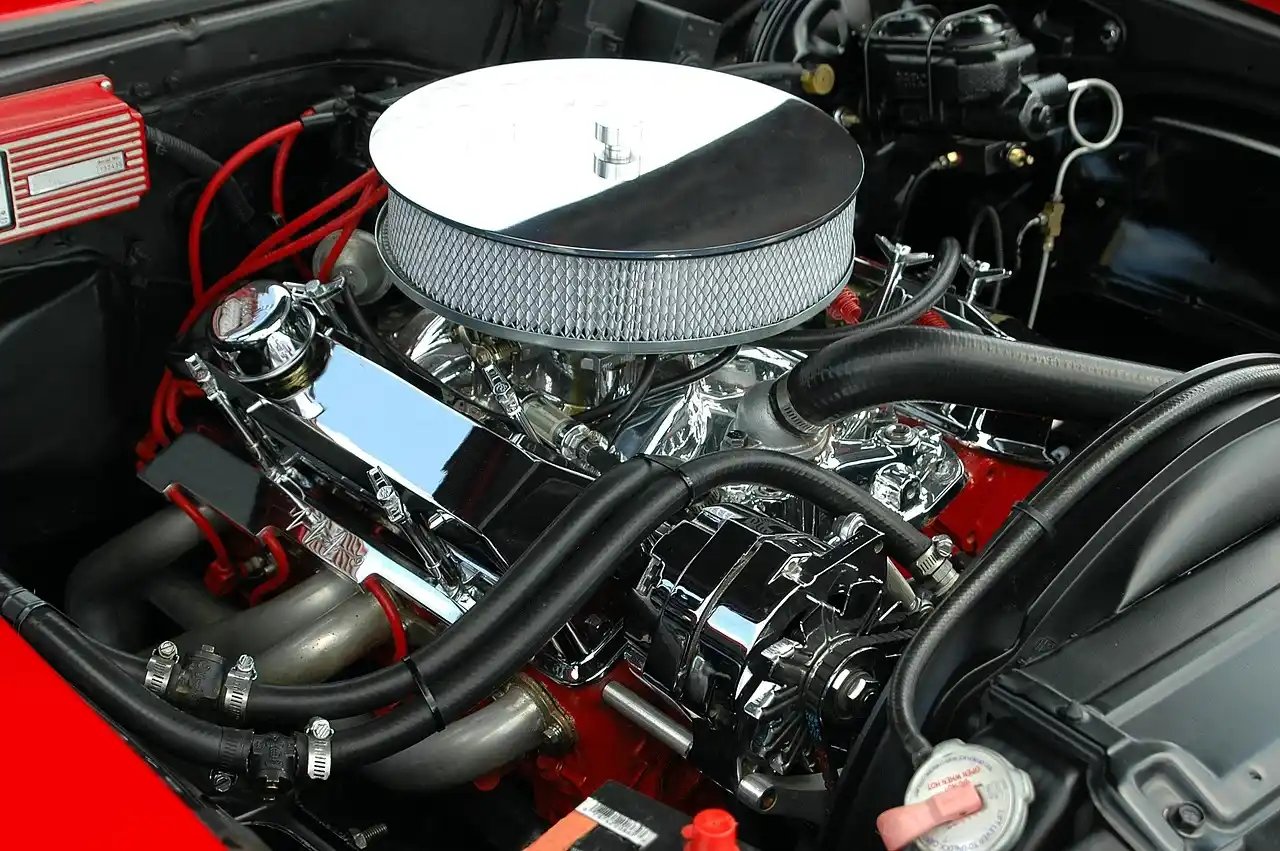
How Do You Know If Your Engine Is Burning Oil?

A steady blue-gray exhaust plume, rising oil consumption, and oily spark plugs can suggest the engine is burning oil; about one quart every 1,000-2,000 miles is a common red flag. Leave it alone, and you can foul plugs, damage catalytic converters, and miss a leak that belongs on the outside of the engine. This guide walks through smoke color, tailpipe residue, oil spots, smell, and quick checks that separate internal burning from external seepage.
True oil burning means oil is entering the combustion chamber and being burned with the air-fuel mix. External leakage means oil is escaping the engine and dripping or spraying onto hot parts, often creating a smell without tailpipe smoke.
What counts as oil burning?
Oil burning versus external leaks
Blue-gray exhaust smoke points toward oil inside the engine, while a burning oil smell with no smoke often points to oil on the exhaust or another hot surface. Those are different problems, and they usually need different next steps.
If the smell starts near the exhaust after a drive, oil may be dripping onto the exhaust system. If the tailpipe is the source of the blue tint, the engine is likely burning oil internally.
What you can check in the driveway
You can sort many oil-loss complaints before you book a repair. Check the dipstick first, look for fresh drips under the car, and track how much oil the engine uses over a few hundred miles.
Reading the engine oil dipstick
Park on level ground. Shut the engine off and wait a few minutes so oil drains back to the pan. The reading is only useful when the car is level.
Pull and wipe the stick. Remove the dipstick, clean it, then reinsert it fully before pulling it back out. This gives a clean reading instead of a smeared one.
Read the marks carefully. Oil should sit between the MIN and MAX marks or within the crosshatching. If the level is below minimum, add the correct oil.
Check color and texture. Used oil is often brown or black. Milky oil is a different warning sign and can mean coolant is getting into the engine.
A common first-timer mistake is judging the oil level right after a hard drive and before the engine has had time to settle. That can hide a low level or make one side of the stick look higher than it is.
Checking for fresh leaks under the car
Look under the parking spot. Check the floor after the car sits overnight. Fresh oil spots often show up as dark, slick patches on concrete or cardboard.
Trace the wet area upward. Inspect the oil pan, drain plug, filter, valve cover edges, and the front or rear of the engine. Oil can drip onto hot components and create a burning smell.
Notice where the smell starts. If the odor is strongest near the exhaust, the leak may be landing on hot metal. Oil dripping on the exhaust system can cause an acrid smell.
If the ground stays clean but the dipstick keeps dropping, the engine may be consuming oil internally rather than leaking externally.
Tracking oil use by mileage
Record the starting level. Note the odometer reading and the dipstick level after a proper check on level ground. The owner’s manual may list the oil grade, such as 0W-20 or 5W-30.
Log every top-off. Add the exact amount you pour in, then note the mileage again. This creates a clear refill log instead of a guess.
Check at every other fill-up. Consumer Reports recommends checking oil at every other gas fill-up. That cadence catches slow loss before the level reaches the minimum mark.
Say the engine takes half a quart every 800 miles with no puddles under the car. That pattern is more consistent with internal oil use than with a simple external leak.
Signs your engine is burning oil
The best clue is a pattern, not one symptom by itself. Blue-gray smoke, smoke that appears at startup or under acceleration, and a falling oil level with no visible leak all point in the same direction.
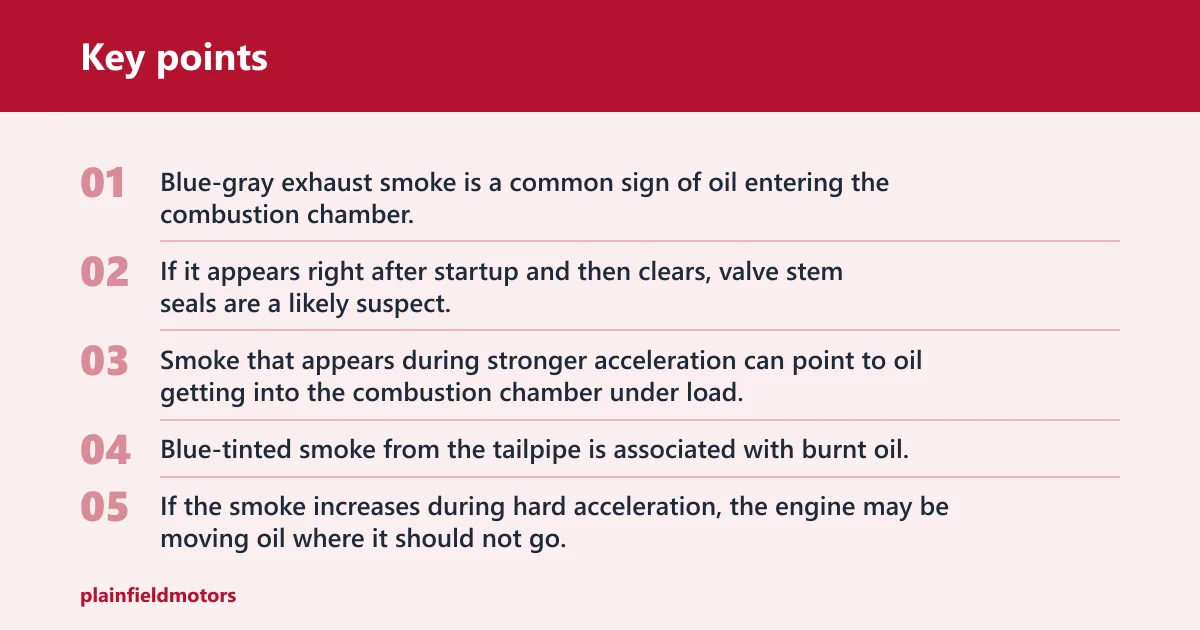
Blue-gray smoke at startup
Blue-gray exhaust smoke is a common sign of oil entering the combustion chamber. If it appears right after startup and then clears, valve stem seals are a likely suspect.
That timing matters. Smoke after an overnight sit often points to oil that has seeped past valve stem seals and collected where it can be burned on the next start.
Smoke during acceleration
Smoke that appears during stronger acceleration can point to oil getting into the combustion chamber under load. That can happen with PCV problems, worn rings, cylinder wear, or turbo-related seal leakage.
Blue-tinted smoke from the tailpipe is associated with burnt oil. If the smoke increases during hard acceleration, the engine may be moving oil where it should not go.
Burning smell without visible smoke
A burning oil smell with no smoke often means oil is leaking onto hot engine parts instead of entering the cylinders. Oil can drip onto the exhaust or nearby heat shields and create an acrid odor after driving.
That odor can also appear with low oil or overheating. Do not assume every smell means internal engine wear.
Oil level drop with no clear leak
If the dipstick keeps dropping but you cannot find fresh spots, the engine may be consuming oil internally. A bad PCV system can push oil where it should not go, while worn rings or cylinder wear can let oil slip past the piston area.
Modern turbocharged and direct-injection engines can also use oil without obvious driveway evidence. The absence of a puddle does not rule out a real problem.
Burning oil symptom checklist
| Symptom | Likely source | Quick driveway check | Next step | Triage |
|---|---|---|---|---|
| Blue smoke at startup | Valve stem seals or oil draining into the cylinders | Start cold after the car sits overnight and watch the tailpipe for a brief blue-gray puff | Schedule service; ask for a seal inspection and oil-use check | Schedule |
| Smoke during acceleration | PCV issue, rings, cylinder wear, or turbo seals | Note whether the smoke appears mainly under hard throttle or uphill load | Schedule diagnosis; compression or leak-down testing may be next | Schedule |
| Burning smell without smoke | Oil leaking onto hot engine parts or exhaust area | Look for wet oil near valve cover edges, filter area, drain plug, or exhaust shields | Inspect for leaks soon; top off if needed | Schedule |
| Oil spots under the car | External leak | Check the parking spot after an overnight sit and trace wet areas upward | Repair the leak and change the oil filter if service is due | Schedule |
| Oil level drop without visible leaks | Internal oil consumption | Log mileage and refill amount, then recheck the dipstick on level ground | Monitor closely if use is mild; schedule diagnosis if the drop repeats | Monitor / schedule |
| Milky or dark oil | Milky oil may mean coolant contamination; dark oil is often used oil | Check the dipstick or oil cap for milky residue or unusually thick sludge | Milky oil needs urgent inspection; dark oil alone may simply mean normal service interval | Urgent / schedule |
What causes oil to burn inside the engine?
Oil can burn inside the engine when seals, ventilation parts, or internal components stop controlling oil flow correctly. The most common paths are through the PCV system, valve stem seals, piston rings, cylinder wear, or turbo seals on turbocharged engines.
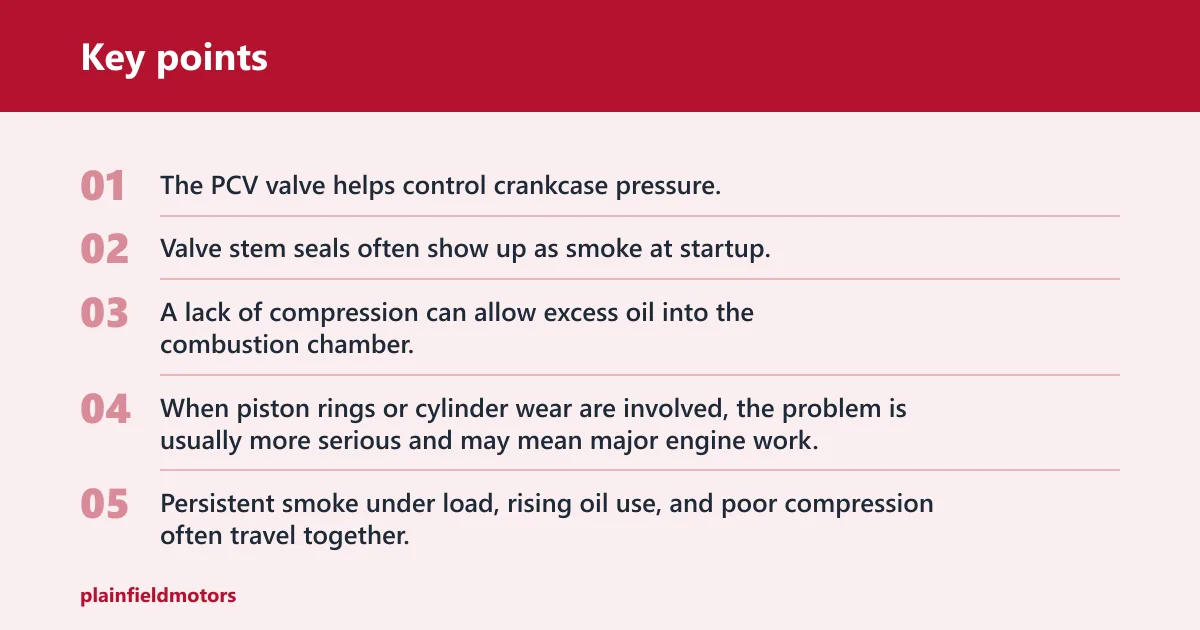
PCV valve problems
The PCV valve helps control crankcase pressure. A worn PCV valve can cause pressure buildup and blow out seals, and a bad PCV system can push oil where it should not go.
That can increase oil use without leaving obvious spots on the ground. If the engine also has rough idle, oil residue in intake plumbing, or repeat loss after top-offs, the PCV system deserves attention.
Valve stem seals
Valve stem seals often show up as smoke at startup. They can let a small amount of oil seep into the combustion chamber while the engine sits, then burn off after the first few seconds of running.
This pattern is easy to miss if you only check after the car has warmed up. A cold-start smoke puff is a useful clue.
Piston rings and cylinder wear
A lack of compression can allow excess oil into the combustion chamber. When piston rings or cylinder wear are involved, the problem is usually more serious and may mean major engine work.
Persistent smoke under load, rising oil use, and poor compression often travel together. A mechanic may move to compression testing or a leak-down test to separate ring wear from seal problems.
Turbo-related oil leakage
If the engine has a turbo, turbocharger seals can be a cause. Turbo seal issues can send oil into the intake or exhaust side, which may create smoke during acceleration or after a long idle.
Do not assume every turbo engine with oil use has failed rings. The path matters, and the turbo may be the first place to check.
What does bad engine oil look like?
Bad engine oil can look milky, unusually thick, or contaminated with coolant. Used oil is often brown or black, so dark color alone does not prove a problem.
Milky oil
Milky oil can indicate coolant leaking into the engine. If the oil on the dipstick or under the filler cap looks tan, creamy, or frothy, stop driving and have the car inspected.
That is different from ordinary dark used oil. Milky contamination can mean a head gasket or another internal sealing problem.
Very dark oil
Oil should appear brown or black when used. Dark oil by itself can be normal if the change interval is due, but thick sludge, gritty residue, or a burnt smell points to neglected service or overheating.
The oil filter belongs in the service picture too. A clogged or old filter can make oil service less effective, so it should be changed with the oil service.
Oil filter clues during service
If the filter is soaked, crushed, or coated with fresh oil, it may point to an external leak. If the filter has been overdue for a long time, that can worsen oil quality and make diagnosis harder.
During a proper oil change, the filter should be replaced along with the oil, and the correct viscosity from the owner’s manual should be used.
When is it safe to drive?
It is safe to drive only when the oil level is correct, the smoke is light and brief, and the problem is being monitored. If the oil is below the minimum mark, add oil before driving farther.

Heavy smoke, a rapid oil drop, or milky oil changes the picture. Those signs need faster action.
Monitor
Monitor if the engine uses a small amount of oil, there is no fresh leak, and the smoke is rare and brief. Keep the refill log, recheck the dipstick on level ground, and watch for any change in smell, smoke, or oil spots.
Schedule service
Schedule service if the car smokes at startup, burns oil under acceleration, or keeps losing oil with no visible leak. That is when a technician should inspect the PCV system, valve cover area, turbo plumbing if equipped, and the oil filter area.
Urgent stop-driving signs
Stop driving and get help if the oil is below the minimum mark and you cannot safely add it, if the oil looks milky, or if smoke is heavy and continuous. Low oil can cause overheating and engine damage, and running low on oil can create a burning smell after driving.
If the dipstick shows below MIN at a gas station, and the car has just started smoking blue-gray on acceleration, add the correct oil first, then arrange inspection quickly if the level drops again within a short mileage interval.
How to check engine oil the right way
Check the oil on level ground, with the engine off, and follow the dipstick marks exactly. The oil should sit between MIN and MAX or within the crosshatching, and if it is below minimum, add oil right away.
Use the viscosity listed in the owner’s manual, such as 0W-20 or 5W-30. The wrong grade can complicate diagnosis and affect oil use.
Warm the engine briefly. Let it run long enough to circulate oil, then shut it off and wait a few minutes. Some vehicles specify a cold check, so follow the manual if it gives a different procedure.
Level the vehicle. Park on flat ground before reading the dipstick. A slope can make the reading misleading.
Read and refill carefully. If the level is low, add small amounts of the correct oil and recheck. Do not overfill, since that can create its own problems.
Frequently asked questions
How do you know if your engine is burning oil?
Look for a blue-gray exhaust plume, repeated oil-level drops, and oily residue on spark plugs or tailpipe tips. If the dipstick is low on level ground and there is no fresh leak under the car, internal oil burning becomes more likely than an external seep.
Why is my engine burning oil?
Common causes include a bad PCV valve, worn valve stem seals, piston ring or cylinder wear, and turbocharger seal leaks on turbo engines. Oil can also burn after it leaks onto hot engine parts, so the smell alone does not prove an internal failure.
Why is my car burning oil but not leaking?
That pattern usually means the engine is using oil internally instead of losing it onto the ground. Valve stem seals often cause startup smoke, while rings, cylinder wear, or PCV problems can show up under acceleration or as a slow, steady oil drop.
What color smoke means your engine is burning oil?
Blue-gray smoke is the classic sign. It often comes from the tailpipe during startup or acceleration and points to oil entering the combustion chamber. White steam suggests coolant, and black smoke usually points more toward fuel than oil.
Can a bad PCV valve cause oil burning?
Yes. A worn PCV valve can cause pressure buildup and blow out seals, and a bad PCV system can push oil where it should not go. That can raise oil use without a simple driveway leak, so the PCV system should be checked early.
How much oil burning is normal?
Some engines use a small amount of oil, but any steady loss deserves attention.ves tracking. A common rule is to log mileage and refill amount over time; if the loss is repeated, growing, or pushes the level below the minimum mark, it needs inspection.
Is it safe to drive a car that is burning oil?
It is only safe to drive if the oil level stays above minimum, the smoke is light, and the problem is being watched. Heavy smoke, a rapid oil drop, or milky oil means you should stop driving and get the car inspected promptly.


