
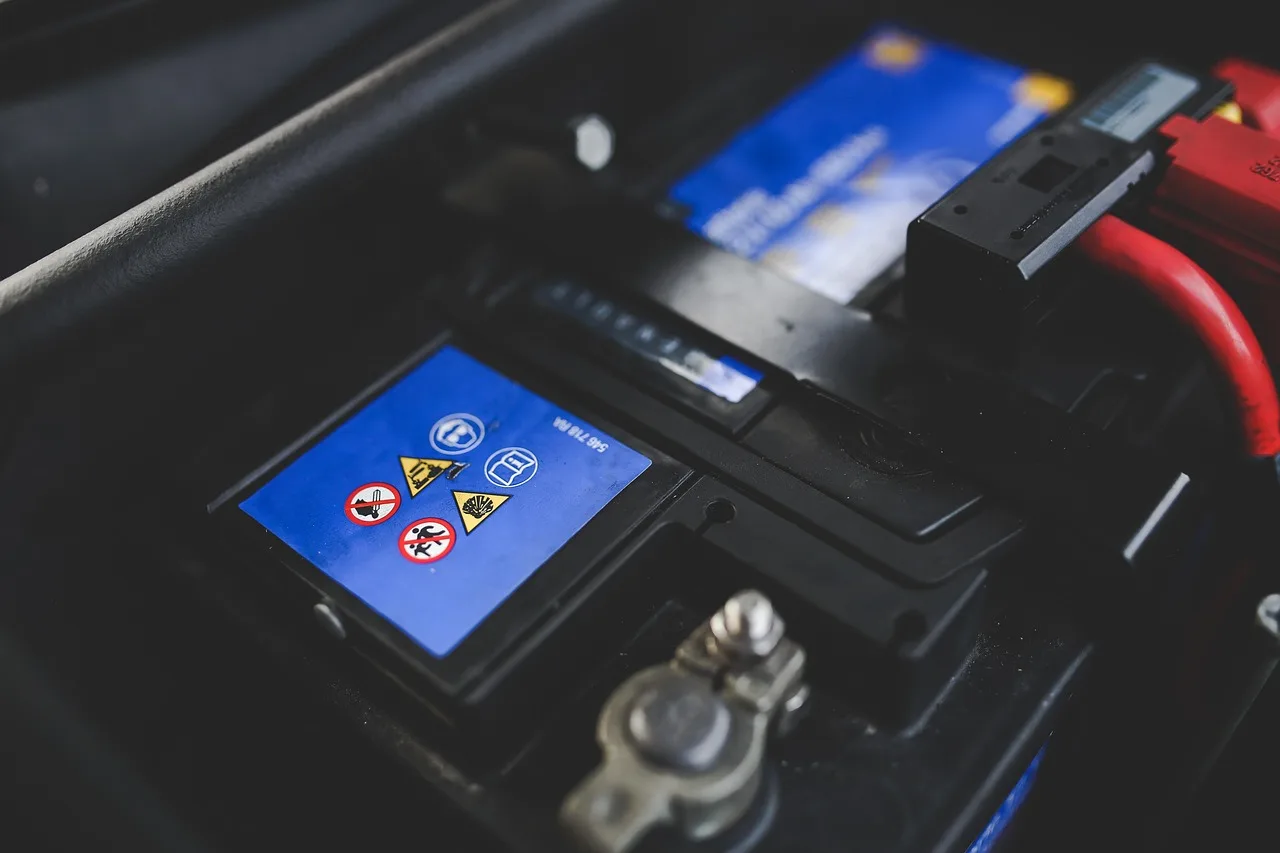
How Do You Know If Your Car Battery Is Not Holding a Charge?

If your car battery is not holding a charge, it will often fall below 12.4 volts after sitting, drop under about 9.6 volts while cranking, or keep dying because of a charging or parasitic-draw problem. Leave it alone, and you can end up stranded while missing alternator or wiring faults that keep draining the battery. This guide shows how to tell a weak battery from an undercharge or drain using timing, voltage checks, and a starter-load test.
What the symptoms mean
A 12-volt car battery stores chemical energy and turns it into electrical energy for starting. It can still start the engine for a short time even while it is failing, especially if age or sulfation has already reduced its output. That is why symptom timing matters as much as the first voltage reading.
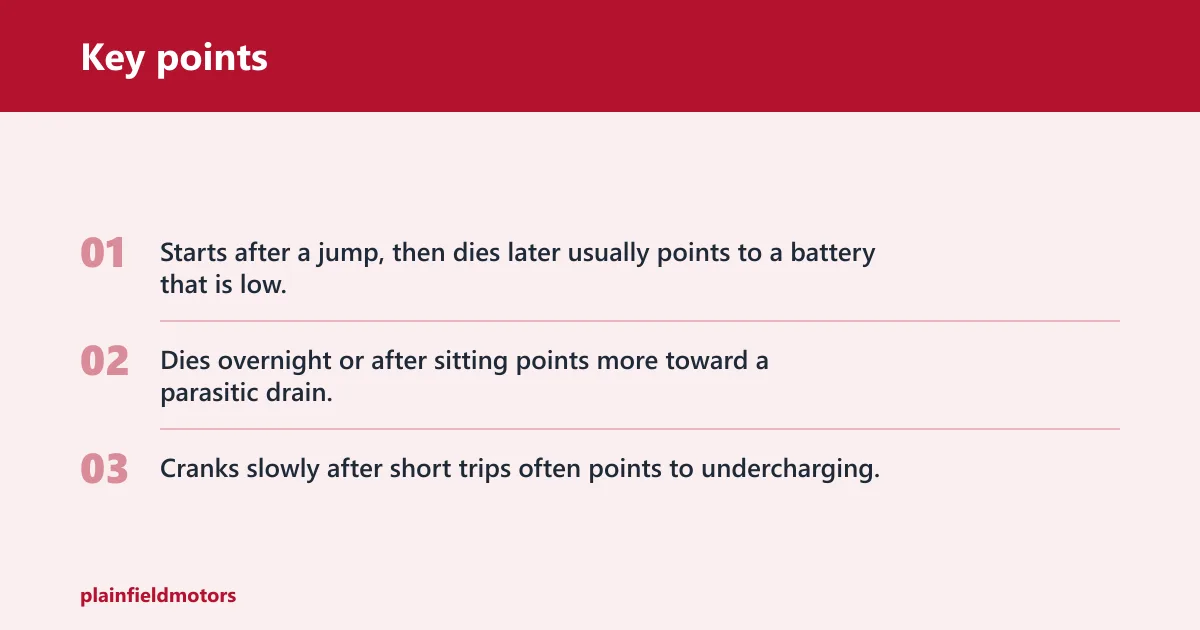
Starts after a jump, then dies later usually points to a battery that is low, a charging problem, or both. Dies overnight or after sitting points more toward a parasitic drain, a weak battery with low reserve, or a terminal problem that is breaking the connection. Cranks slowly after short trips often points to undercharging, because the battery never gets fully replenished.
| Symptom timing | Likely cause | Quick check | Next action |
|---|---|---|---|
| Starts after a jump, then dies later | Low battery, charging-system fault, or both | Check resting voltage after the car sits, then check charging voltage with the engine running | Recharge the battery, then test the alternator and wiring if it drops again |
| Voltage is 12.4V resting but drops below 9.6V cranking | Weak battery, sulfation, or high internal resistance | Run a load test or watch cranking voltage with a power probe or voltmeter | Replace the battery if it fails the starter-load check |
| Battery dies overnight | Parasitic drain, loose connection, or battery defect | Inspect terminals first, then look for a drain if the battery passes charging and load checks | Repair the drain or connection; replace the battery only if it no longer recovers |
| Cranks slowly after short trips | Short-trip use, undercharging, or aging battery | Check resting voltage and confirm the alternator is raising voltage after startup | Charge the battery fully, then keep testing if the symptom returns |
How do you check battery voltage?
Use a voltmeter with the ignition off and the battery at rest. A good battery should read 12.4 to 12.7 volts at rest, though the lower end of that range can still reflect a partly charged battery. Below 12.4 volts means the battery needs charging, and below 12.2 volts means you should trickle charge it and recheck before you call it bad.
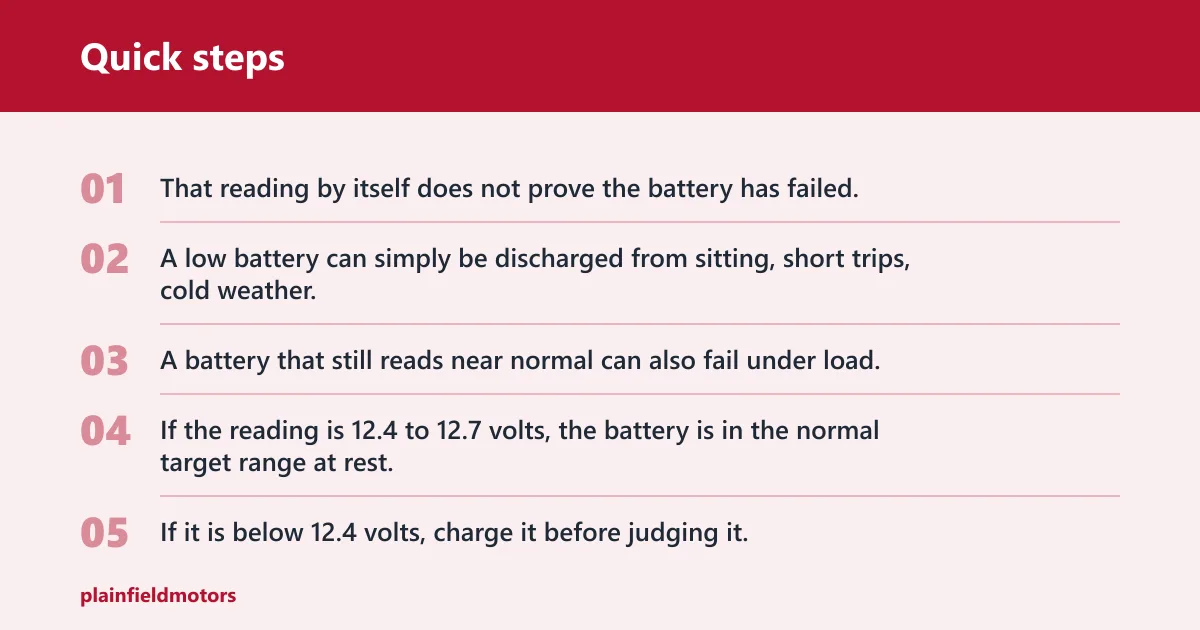
That reading by itself does not prove the battery has failed. A low battery can simply be discharged from sitting, short trips, cold weather, or a bad connection. A battery that still reads near normal can also fail under load, so resting voltage is only the first filter.
How to read the result
If the reading is 12.4 to 12.7 volts, the battery is in the normal target range at rest, but the lower end can still mean it is only partly charged. If it is below 12.4 volts, charge it before judging it. If it stays low after charging and resting, move to a cranking check and look for causes such as sulfation, a drain, or a charging fault.
A common first-timer mistake is replacing a battery just because it reads low after a week of sitting. That can waste money. A low resting reading can simply mean the battery was not recharged enough after a jump-start or short drive.
What cranking voltage tells you
Cranking voltage shows how the battery behaves under starter load. During cranking, battery voltage should never drop below 9.6 volts. A battery below 9.6 volts during cranking may be sulfated, low on charge, affected by cold, pulling against a high starter draw, or dealing with cable issues.

You can use a power probe or a voltmeter for this check. Watch the reading while someone cranks the engine, or use the probe to verify battery voltage and observe the drop during cranking. If the voltage falls too far, the battery may not have enough reserve, even if it looked acceptable at rest.
When to move to a load test
A load test is the next step when resting voltage looks decent but the engine cranks slowly, clicks, or only starts after a jump. It checks battery behavior under starter load and separates a weak battery from a charging-system issue. If the battery cannot stay above 9.6 volts while cranking, replacement becomes much more likely.
Suppose your sedan sits all weekend, then shows 12.4 volts on Monday morning but falls to 9.1 volts while cranking. That pattern points to a battery with poor reserve, not just a surface-charge issue. If the same car starts fine after charging and then fails again a day later, keep checking for sulfation or a drain.
What causes a battery not to hold charge?
The usual causes are age, sulfation, loose or corroded terminals, parasitic drain, and undercharging from short trips or a charging-system fault. Any of these can make the battery seem weak long before it completely quits. Match the cause to the timing of the failure.
Age and sulfation
As a 12-volt car battery ages, it can lose capacity and develop sulfation on the plates. That raises internal resistance and makes the battery struggle more under starter load. The result is often slow cranking after sitting, followed by a temporary recovery after charging, then another failure.
Loose or corroded terminals
Battery terminals must be clean and tight. Corrosion or loose clamps can mimic battery failure because they interrupt current flow at the positive or negative posts. A battery may look dead, but the real problem is poor contact. Inspect the posts and clamps before you replace anything.
Battery troubleshooting should always include a quick visual check. If the clamps can twist by hand or there is visible green or white buildup, clean and tighten the terminals before retesting. This step is simple, but it can change the result of every later test.
Parasitic drain
A parasitic drain pulls power while the car is off. That is why a battery can test fine right after driving, then die overnight or after a day or two. If the battery is healthy enough to charge and pass a load test, but it keeps going flat when parked, the draw is the next thing to inspect.
Undercharging from driving habits or the charging system
Short-trip driving can leave the battery partly discharged, especially in cold weather. Cold temperatures reduce battery output, so a weak battery may feel much worse in winter. That does not mean cold weather alone is the cause; it usually exposes a battery that is already low on reserve.
Charge, jump, or replace?
Use a battery charger when the battery is simply low. A smart charger or manual charger can bring low battery voltage back up. Jumping the car with jumper cables is a temporary recovery step, not a repair.
- Check the battery at rest with the ignition off.
- If it is below 12.4 volts, charge it and recheck.
- If it is below 12.2 volts, use a trickle charge and recheck again.
- Inspect terminals for corrosion or looseness.
- Crank the engine and watch for voltage below 9.6 volts.
- If the battery passes charging but keeps going flat, inspect for a drain or charging fault.
Say your compact car starts with a jump in the morning, drives to work, then fails again the next evening. That pattern can mean the battery is weak, but it can also mean the alternator is not replenishing the battery or an electrical load is draining it while parked. The fix depends on which test fails first.
Replacement makes more sense when the battery will not hold above the 12.4 to 12.7 volt range after charging and resting, or when it drops below 9.6 volts during cranking. If the battery passes those checks, replacing it first can miss the real fault.
Could the alternator be the problem?
Yes. If the battery keeps undercharging, the alternator or charging system should be considered. An alternator can overcharge the battery, and undercharging can also leave it underfilled after each drive. Either fault can look like a bad battery at first.
How to separate battery trouble from charging trouble
Remove surface charge before judging the reading. Then retest with the engine running and again after the vehicle sits. If the battery is low after resting, weak while cranking, and still not being charged properly, the charging system needs attention before you replace parts at random.
The simplest rule is this: if the battery is low at rest, charge it first; if it still fails under load, test the battery; if it keeps dying after sitting, look for a drain; and if running voltage is too high or the battery keeps undercharging, test the alternator. That sequence prevents a lot of guesswork.
Frequently asked questions
How do you know if your car battery is not holding a charge?
Look for a battery that keeps falling below about 12.4 volts after sitting, may fail to stay above about 9.6 volts while cranking, or goes flat again after a full charge. If it starts after a jump but dies later, the problem may be the battery, the charging system, or a parasitic drain.
What would cause a car battery not to hold a charge?
Age, sulfation, corroded or loose terminals, short-trip driving, parasitic drain, and alternator faults are the most common causes. A battery can also seem weak in cold weather because low temperatures reduce capacity. The right test depends on whether the symptom shows up at rest, during cranking, or after sitting overnight.
How do I check if my car battery is bad?
Start with a voltmeter at rest, then check cranking voltage with a power probe or voltmeter. A good battery should read 12.4 to 12.7 volts at rest, and it should not drop below 9.6 volts while cranking. If it fails that load check, it is much more likely to be bad.
What voltage means a car battery is not holding charge?
Below 12.4 volts at rest means it needs charging. Below 12.2 volts means you should trickle charge it and recheck. If the battery drops below 9.6 volts during cranking, it may be sulfated, low on charge, affected by cold, pulling against a high starter draw, or dealing with cable issues. That is the point where replacement becomes a serious possibility.
Can a battery be charged but still go dead quickly?
Yes. A battery can accept a charge and still lose power quickly if it is sulfated, aged, or being drained while parked. It can also go flat if the alternator is undercharging it on every drive. That is why a resting voltage reading alone does not settle the diagnosis.
Is corrosion or a loose connection causing my battery issue?
It might be. Corrosion or a loose clamp at the positive or negative terminals can mimic a dead battery and even cause slow cranking or a no-start. Clean and secure the terminals before deeper testing. If the battery still fails a resting or cranking check after that, move on to the battery or charging system.


